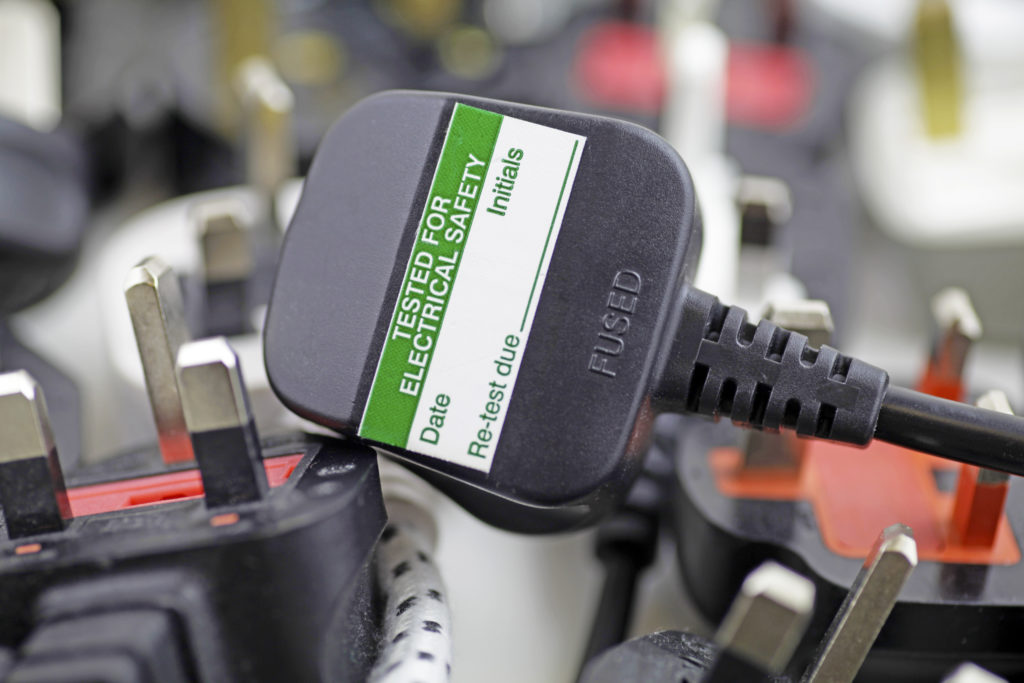
Top 10 Ways On How To Assess The Qualifications Of Technicians For PAT in Solihull
The capability of testers to conduct Portable Appliance Testing represents a crucial element in transforming the mechanical testing method into one that is legally defendable. According to UK legislation (specifically the Electricity at Work Regulations of 1989) there is no mandatory licensing scheme for testers of PAT. Regulation 16 stipulates that people must possess the "technical know-how or experience" necessary to prevent injuries and accidents. In order to meet the "competence" principle, the employers (dutyholder) must select and employ only those with a combination or formal training as well as practical experience and an ability to judge. Due to the lack of a compulsory qualification, there are various capacities of technicians. Therefore, it is essential that the dutyholders know how to prove competence beyond simply having a certificate. A qualified technician doesn't just conduct tests, they know the underlying principles of electrical safety, and can interpret results accurately and make well-informed pass/fail judgments that are based on the IET Code of Practice, and provide valuable risk assessment insights.
1. The Definition of Competence under EAWR, 1989 in Solihull
The lawful requirement is outlined by Regulation 16 of the Electricity at Work Regulations 1989, which mandates that persons are competent enough to avoid injuries and risks. HSE defines competence in terms of "the ability for a person to perform a task with out taking risks for themselves or anyone else." For PAT testing, it's an amalgamation of three components – a good understanding of electrical theory (theory) as well as sufficient knowledge (practical applications) and a good knowledge of the systems (specific appliances and the environments they will be working in). To be legally competent the technician must possess all three.
2. Formal Qualifications as opposed to. Demonstrable Competence in Solihull
Although there isn't a legal requirement for a specific certificate, formal training is the most evident proof of understanding. City & Guilds qualification 2377 ("In-service inspection and testing of electrical equipment") is the industry standard. The possession of this certificate does not imply competence. It has to be taken together with practical experience. Dutyholders must consider the qualifications relevant to their work and evidence of their practical experience. The technician must have extensive experience to prove their expertise.
3. City & Guilds 2377 Qualification What exactly is it?
City & Guilds' 2377 certification is an Level 3 qualification which assesses a candidates knowledge of the IET Code of Practice, and their capacity to conduct tests and inspections properly. The City and Guilds 2377 is available in two distinct parts. 237777 (theory multiple-choice test based on theory) and 237778 (practical assessment). The full certificate shows that the technician has undergone independent assessment of both their theoretical knowledge and their skills in the field. If you are attempting to verify this certification it is recommended to request the certificate's id number and check its validity on the City & Guilds online verification portal, since certificates can be counterfeited.
4. Practical Hands-On experience is essential in Solihull
If a technician isn't able to apply the theory, it is of no use. A competent technician should be able to test appliances in a variety environments. Their experience enables them to detect subtle issues a novice might miss or handle the most unusual equipment in a safe manner and efficiently in challenging environments such as industrial sites or construction sites. The employee should inquire about the number of years of experience the technician has and the kind of site that they work in to determine the relevancy of their experience.
5. The IET Code of Practice for In-Service Inspection and Testing
The IET Code of Practice has become the bible of portable appliance testing. A qualified technician should not just possess a copy however, they should also have an understanding of its content. This means knowing the various types of equipment, the sequence of inspections and visual tests and how to properly employ test instruments. The ability to correctly refer to and follow this guideline is a crucial indicator of their professionalism and competency.
6. Equipment calibration and understanding of Test Instruments
The technician needs to understand that the accuracy of test results is dependent on the equipment they use. To ensure accuracy it is essential that they know that PAT testers should be calibrated regularly (normally every year) by UKAS accredited laboratories. They must have an official certification for their device. In addition, they must know how the device works and also conduct the daily test (e.g. the lead test). They must also be able to interpret the results of the device instead of simply recording numbers.
7. Capability to conduct meaningful visual Inspections in Solihull
A thorough visual inspection can find at least 90% of faults. A highly qualified technician places immense importance on this step and is meticulously examining plugs as well as cables, connectors and casings for damage, wear or indications of excessive heat. They know how to properly connect the plug, as well as the correct fuse ratings. It is possible that a tester who has less experience will rush or skip this process entirely.
8. Judgement and decision-making Interpreting results and applying the Pass/Fail criteria in Solihull
The electronic tester gives readings while the technician renders the final decision. The ability to interpret the results according to the IET Code of Practice, the device and its pass/fail limits is a sign of proficiency. They must know when a reading of insulation resistance is acceptable or when an earth continuity reading seems to be passable may indicate a fault in a particular type of appliance. The ability to make a decision is the real value of a qualified professional.
9. Questions on Liability and Insurance in Solihull
Although it is not required by law, a competent technician should at least have Public Liability Insurance (e.g., PS2-5 million). It protects the client if the technician damages the property during testing. If they hire a technician who is demonstrably competent, the dutyholder can strengthen their legal defence, showing that they have done all they could to locate a competent person. This is crucial should an investigation be carried out into an electrical accident.
10. Communication and documentation skills in Solihull
It's useless to test without accurate and clear documentation. A qualified technologist must produce precise, clear documents and asset registers which correctly identify each appliance. The results of all tests should be documented, with a clear outcome stated. They should also be able to effectively communicate with the responsible person informing them of any faults they find, the risks associated, and what actions are required (e.g. replacement or repair). Communication with the dutyholder is a crucial part of the safety process. Have a look at the best electrical equipment testing in Solihull for more examples.
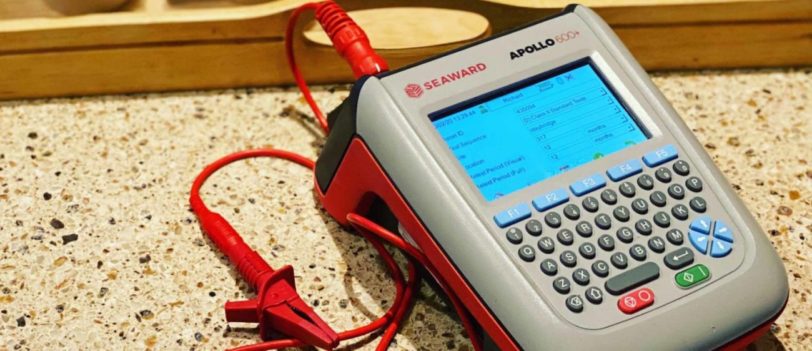
Top 10 Tips For Tips To Avoid Fire Extinguisher Coverage And The Solihull in Solihull
The geographic Solihull, service coverage, and the reliability the fire safety company are all impacted by the geographic Solihull, coverage of services as well as the service provided by the company. In the UK in the UK, in which the Regulatory Reform Order (Fire Safety) 2005 demands constant and timely maintenance of fire extinguishers the presence of a service provider as well as their logistical capabilities, directly impact their ability to meet contractual and legal requirements. In deciding between a company with a broad geographic coverage and a specialist local who has a deep understanding of the region, you must carefully consider responses times and travel expenses. Also, you should be aware of cultural knowledge and regional compliance. A provider's operational footprint–their depot Solihulls, engineer distribution, and territory management–determines whether they can offer genuine rapid response or merely theoretical coverage, making this a critical factor in ensuring your premises remain protected and compliant without suffering from excessive downtime or hidden charges related to geographic constraints.
1. National vs. Regional Provider operational models
The UK market has large national companies that have extensive networks and smaller, localised experts. National companies typically operate through regional depots, a dispersed network of engineers and branding consistency. They can manage large multi-site projects across the UK. Their advantages are scalability and often robust backup systems. Local providers can provide in-depth knowledge of specific areas (e.g. Southeast Scotland, Scotland) which could result in a more personalised quality of service, and very fast response times within their core territory. It is important to know if an international provider is effective in your particular area or is at the very edge of their coverage. That can mean more time to respond and greater cost of mileage.
2. Engineer Density of Your Postcode
The single most important factor for practical service delivery is the Solihull to a permanent and fully equipped engineer at your site. The service provider might claim "UK-wide coverage," however this will be not relevant if their closest engineer is two hours away. It is important to ask the provider: "Where's your nearest engineer situated near the postal code we have?" Ask "How many engineers are in my Geographic Area?" The high number of engineers in an area means shorter time to travel for scheduled visits, speedier intervention in emergencies, and less chances of having appointments cancelled due to unforeseen delays or other issues in the.
3. Rates of Mileage and Callout Costs in Solihull
The Solihull directly affects cost via mileage policies. A transparent provider will have a clear and concise policy included in their estimate. Many businesses offer a specific number of "free miles" that they can travel from their base or a nearby depot. Beyond that there is a per-mile fee applied. The costs are usually high in rural and remote regions. The costs could be substantial which is why it is crucial to get a written estimate that is based on your specific Solihull. Local providers are not required to charge for mileage within their core counties, giving businesses in the area a cost-saving advantage.
4. Regional Compliance Nuances and Regulations
There are a few important differences in the laws governing fire safety across Great Britain. England and Wales operate under the Regulatory Reform (Fire Safety) Order 2005. Scotland is governed by the Fire (Scotland) Act, 2005. This Act has several regulations and can have slight differences in the emphasis placed on enforcement. Northern Ireland has separate legislation. The service providers will have office staff and engineers who are experienced and skilled in regional specifics.
5. Multi-Site Contract Management (Multi-Site Contract Management) and National Account Coordination in Solihull
For companies with multiple Solihulls throughout the UK (e.g., retail chains, franchises and property management companies) The ability of a company to offer seamless coordination of national accounts is paramount. A centralised account manager working in concert with the regional engineers is needed for this to happen. The service provider should demonstrate an advanced scheduling and communication platform that ensures consistency in service delivery, uniform pricing, and unifying reporting. All via a single point contact, regardless of whether your offices are in London, Manchester, or Glasgow. This eliminates all the hassle of managing several local contracts.
6. Warehouse and Depot Infrastructure in Solihull
The physical infrastructure of a service provider is a significant indicator of its service capabilities. Local depots aren't just administrative offices. They're crucial logistic hubs that stock extinguishers parts, replacements and consumables, among other things. If an engineer is close to a depot that is well-stocked it is possible to replenish the stock quickly and resolve many issues within a single visit. Engineers may not have the items they require if a provider is covering your area, but their closest warehouse may be a long distance away. This could lead to delays and repeated visits for basic tasks.
7. Planning for the worst case scenario and redundant engineers in Solihull
Plans for contingency are essential for sudden events, like illness or annual leave. If your provider offers a limited coverage, they may only have one engineer who is responsible for an extensive geographical area. In the event that the engineer is unavailable and your service is delayed or completed by a different engineer who is from a distance. This could compromise the quality. Redundancy is a feature of the service of a company that has multiple engineers within a area. This will ensure uninterrupted service, while also protecting your company from compliance issues caused due to internal resourcing issues.
8. Urban vs. Rural Service Challenges
Urban and rural regions have different service needs. Servicing an office building within Central London can be costly and difficult due to congestion fees in London, ULEZ compliance and the lack of parking. Rural areas face challenges such as longer travel time remote access, and possibly poor mobile signal. A company with experience in your type of area will have a custom-made protocol and pricing that will help you manage these issues effectively.
9. Verification of Claims for Coverage through Client References in Solihull
Check the coverage provided by the provider. Asking local businesses for references is the most effective way to find out about the quality of service provided by a particular provider. A local business that is similar to yours regarding the service they received will give you an idea of what the provider is like. Were they responsive? Did the engineer live locally? Did you have to pay additional mileage costs? This is a great way to confirm (or to disprove) the claim of a service's capabilities within your local area.
10. Contractual Guarantees tied to Geographic Performance in Solihull
In the end, any coverage guarantee must be supported by the terms of the contract. The Service Level Agreement (SLA) should also include geographical performance metrics. For instance, it can ensure that scheduled services will be performed by an engineer based within a specific radius, or that a call-out in an emergency will be responded to from a designated local depot within the specified time. This establishes the coverage promises of the service provider and permits you to initiate action if the actual performance or presence of the service provider fails to meet their promises. See the most popular fire protection in Solihull for site examples.